Casey Lange · 4 September 2026
Sparkwell's Skilled Trades Initiatives Match Manufacturing Sector Expansion
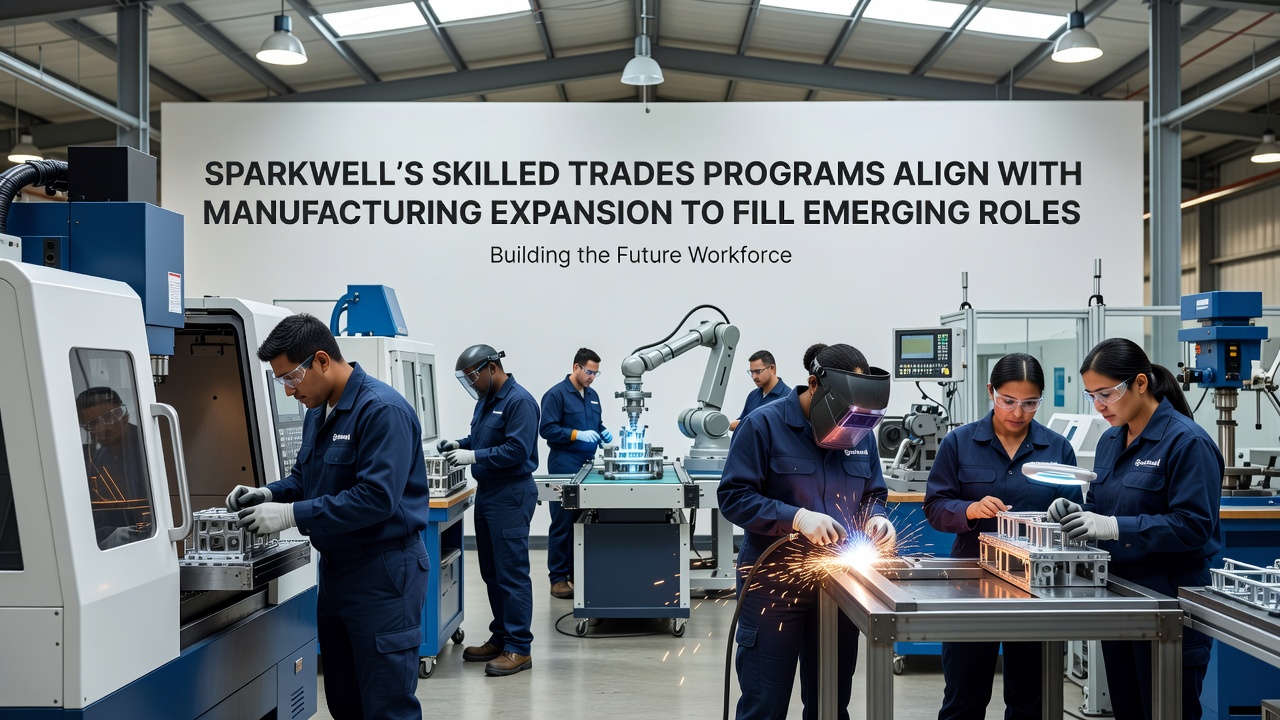
Manufacturing facilities around Sparkwell have added hundreds of positions in recent years, and local training centers responded by adjusting their skilled trades curricula to cover welding, machining, and electrical systems that match those new roles. Enrollment figures from the Sparkwell Technical Institute show a 35 percent rise in program participation between 2024 and 2025, driven by partnerships with three expanding plants on the south side of town.
Company representatives from Apex Manufacturing reported needing workers certified in CNC operation and industrial maintenance, while the Sparkwell Workforce Development Board coordinated with instructors to embed those exact competencies into existing courses. Classes now run on extended evening schedules, allowing current employees to upskill without leaving their shifts, and daytime cohorts focus on recent high school graduates entering the field for the first time.
Manufacturing Growth Patterns in the Region
Regional employment data compiled through September 2026 indicates that manufacturing output in the Sparkwell corridor increased by 18 percent over the prior twelve months, fueled by supply-chain shifts that brought component production back from overseas suppliers. Those gains created openings for 420 skilled positions, according to figures released by the U.S. Bureau of Labor Statistics, with the largest clusters appearing in precision fabrication and automated assembly lines.
Plant managers noted that traditional hiring pipelines no longer supplied enough candidates with hands-on experience, prompting several firms to underwrite equipment donations for the training centers. A local automotive supplier contributed a full-scale robotic welding cell last spring, while an aerospace contractor supplied diagnostic software licenses that students now use during lab sessions.
Program Adjustments and Curriculum Updates
Instructors at the Sparkwell Technical Institute revised syllabi to incorporate lean manufacturing principles alongside core trade skills, ensuring graduates understand both the technical tasks and the efficiency metrics used on modern floors. Certification pathways now align with national credentials recognized by the National Association of Manufacturers, giving completers portable qualifications that employers accept across multiple states.
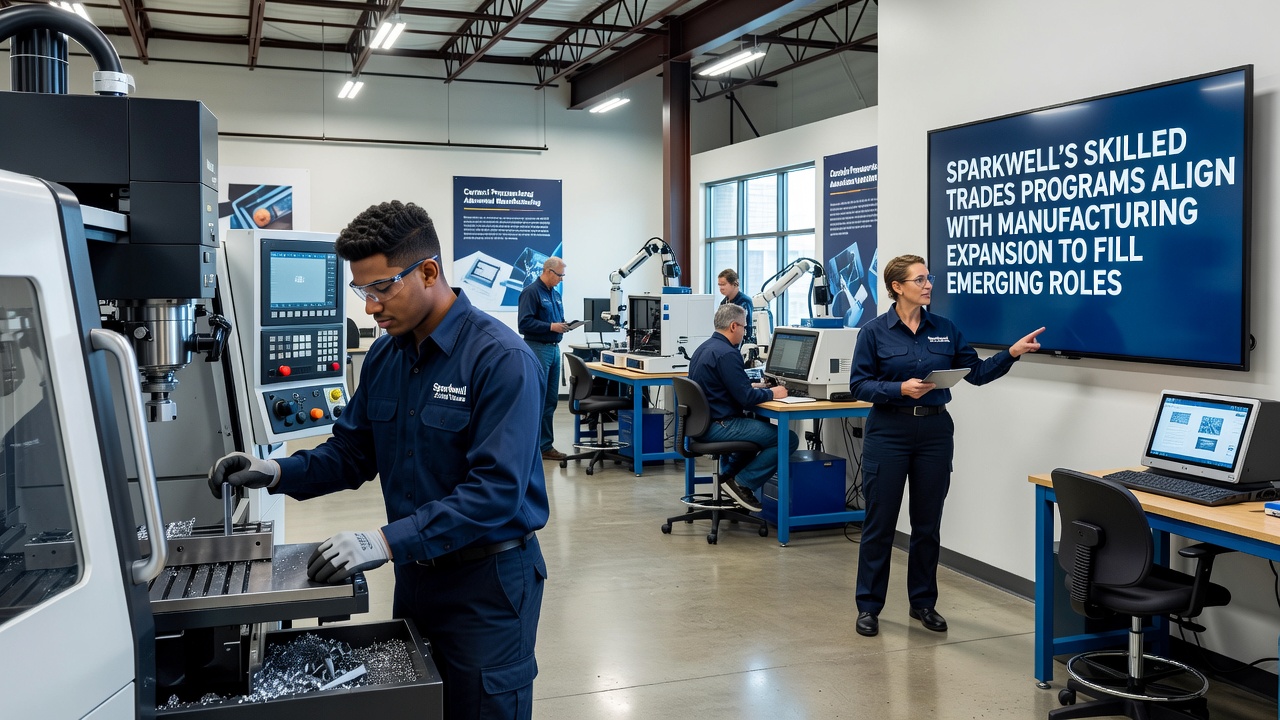
One instructor who has taught machining for twelve years described how the addition of simulation software lets students practice setups on virtual machines before touching physical stock, cutting material waste and accelerating skill acquisition. The same approach appears in electrical programs, where trainees troubleshoot programmable logic controllers through interactive modules before moving to live panels under supervision.
Apprenticeship tracks introduced in early 2025 pair participants with paid placements at partner plants, and completion rates for those combined classroom-and-worksite models reached 82 percent in the most recent cohort tracked through September 2026. Employers cover a portion of tuition in exchange for first consideration when graduates finish, creating a direct pipeline that reduces recruitment costs for the companies involved.
Community and Economic Effects
Local economic reports show that wages for certified trades workers in the Sparkwell area rose an average of 12 percent over the same period that enrollment climbed, reflecting both increased demand and the higher skill levels now required. Community colleges in neighboring counties have begun referring applicants to Sparkwell programs when their own waitlists exceed capacity, spreading the training load across the broader region.
Support services such as transportation vouchers and childcare subsidies, funded through state workforce grants, help remove barriers that previously kept some residents from completing full programs. Case managers track participant progress and connect them with additional resources when attendance patterns suggest external challenges, contributing to the elevated retention numbers observed in recent terms.
Future Alignment Steps
Planning documents released by the Sparkwell Economic Development Authority outline further curriculum expansions scheduled for 2027, including additive manufacturing modules and cybersecurity training for industrial control systems. These additions respond to projected equipment upgrades at two facilities that have already announced capital investments exceeding $15 million each.
Coordinators continue to monitor labor market forecasts from multiple agencies, adjusting course offerings every six months to stay synchronized with employer requirements. The approach keeps training resources focused on roles that actually exist rather than speculative future needs.
Conclusion
Sparkwell's coordinated response between training providers and manufacturing employers demonstrates how targeted program design can address specific workforce gaps while supporting regional economic activity. Continued data sharing and equipment partnerships position the area to absorb additional growth as new production lines come online.